
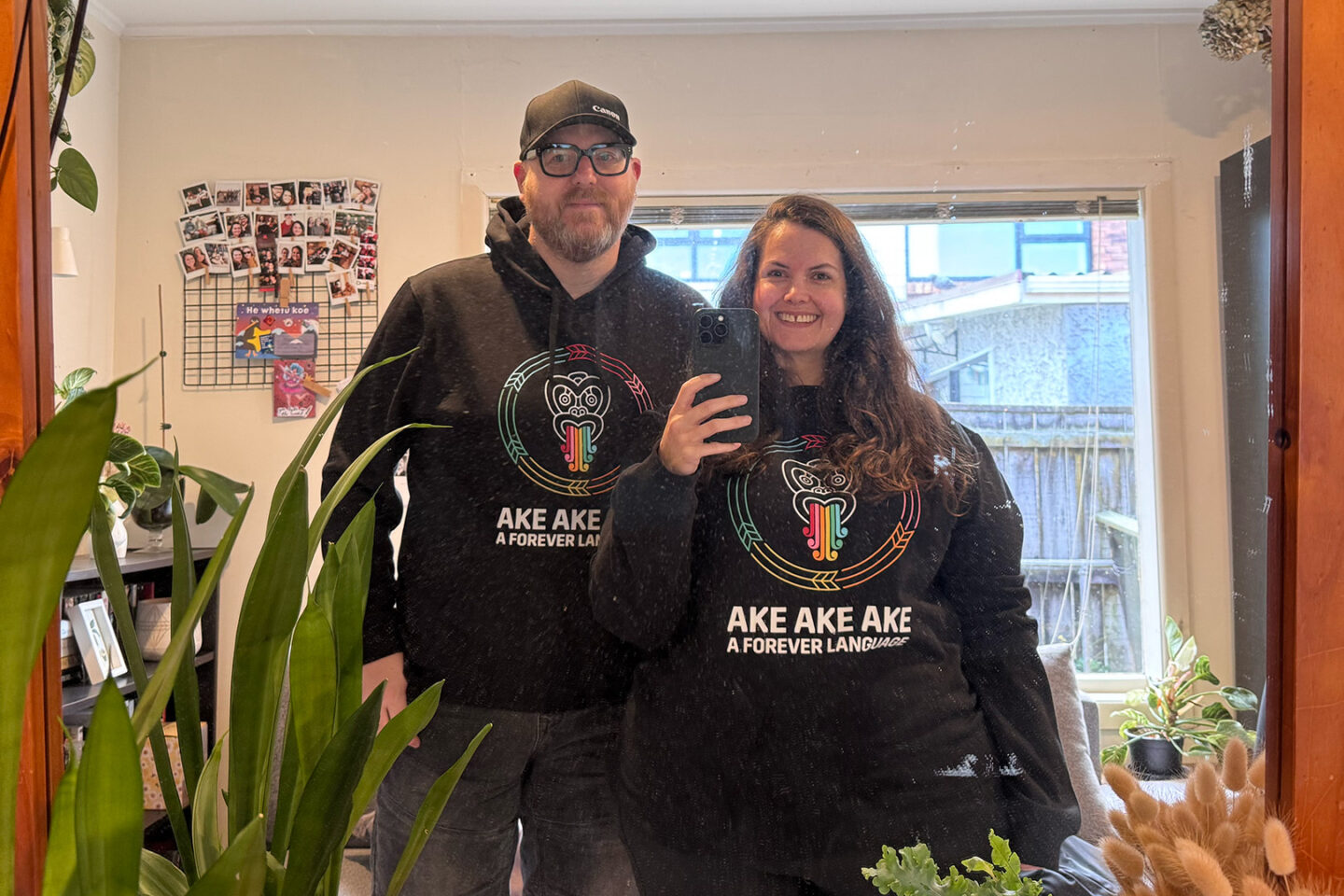
As I’ve mentioned before, the journey to reclaim my reo is one filled with mamae (hurt and whakamā (shame) and many other emotions, just as much now as it was years ago. My work asked me to share what te reo Māori means to me and the role it plays in my life for Te Wiki o te Reo Māori a couple of weeks ago, and since it feels like forever since I wrote anything longform, I wanted to share this here as well. It’s both an update on how my journey is going, and some back story.
I whakapapa Māori, but grew up very distanced from my culture. My mum doesn’t speak te reo Māori, and my grandfather was of a generation where it was not only discouraged but people were beaten for speaking our native tongue.
Growing up, I picked up some te reo Māori words here and there, as many of us who grow up in Aotearoa do, but I was actively discouraged from taking Māori as a language subject when I was at high school, outside the compulsory one term “taster” that we had to do for all elective subjects in third form (that’s year nine, for the youths). Instead, I learned German – chosen mostly because the adults in my life thought it would serve me better in some imaginary future where I worked in foreign affairs. I’d heard you could buy beer at McDonald’s, which made the idea of going on an exchange trip to Deutschland sound like fun (even though I was 13 and there was no way I’d be able to buy beer), so I agreed to sign up for German. That didn’t quite work out as planned – I learned how to sing Paff, der Zauberdrachen (Puff, the Magic Dragon) but left school before any chance of a student exchange. Obviously I also didn’t become a foreign diplomat!
View this post on Instagram
Fast forward to my 30’s, when my grandmother passed away. She was my home, my safe place, and then suddenly she was gone and I felt like I was adrift at sea, spinning around with no one to anchor me. I was really lost without her, and my lack of connection with my own history became really apparent to me, especially with te ao Māori. Thanks to Grandma, who was deeply immersed in genealogy, I have copies of our family tree and know my iwi, but it is all on paper and that “connection” feels like someone else’s story. I realised that if I wanted to make that connection, I would have to drive it myself. No one was coming to find me, to help me find that path. I was wrapped in a deep sense of shame that I couldn’t speak my own language – even more so when I was routinely asked by the people I worked with to translate things (I’m sure that will sound familiar to some of you – people who do speak te reo Māori are often expected to do extra work for free, outside the remit of their roles!).
Ko te reo te taikura o te whakaako mārama.
The language is the key to understanding.
I tried a few different methods of learning. In 2020, I enrolled in an i through Massey University. Then the pandemic hit, and my job got exponentially busier and more stressful. I didn’t have the mental or emotional capacity to study something new AND unpack the pain I felt at being so distanced from my culture AND deal with all the pandemic related stuff too, and an online course that should have taken about 20 hours ended up taking almost two years. It was a struggle but I was determined to finish. When I did, I wanted more.
I got a copy of Māori Made Easy by Scotty Morrison, thinking I’d try learning by book, but I struggled to make myself study regularly, and with no one in my life to kōrero Māori with on a regular basis, it was really hard to put what I was learning in to practice. I knew that if I was going to do this, I’d have to do some in person classes so I could start speaking my reo, not just reading it.
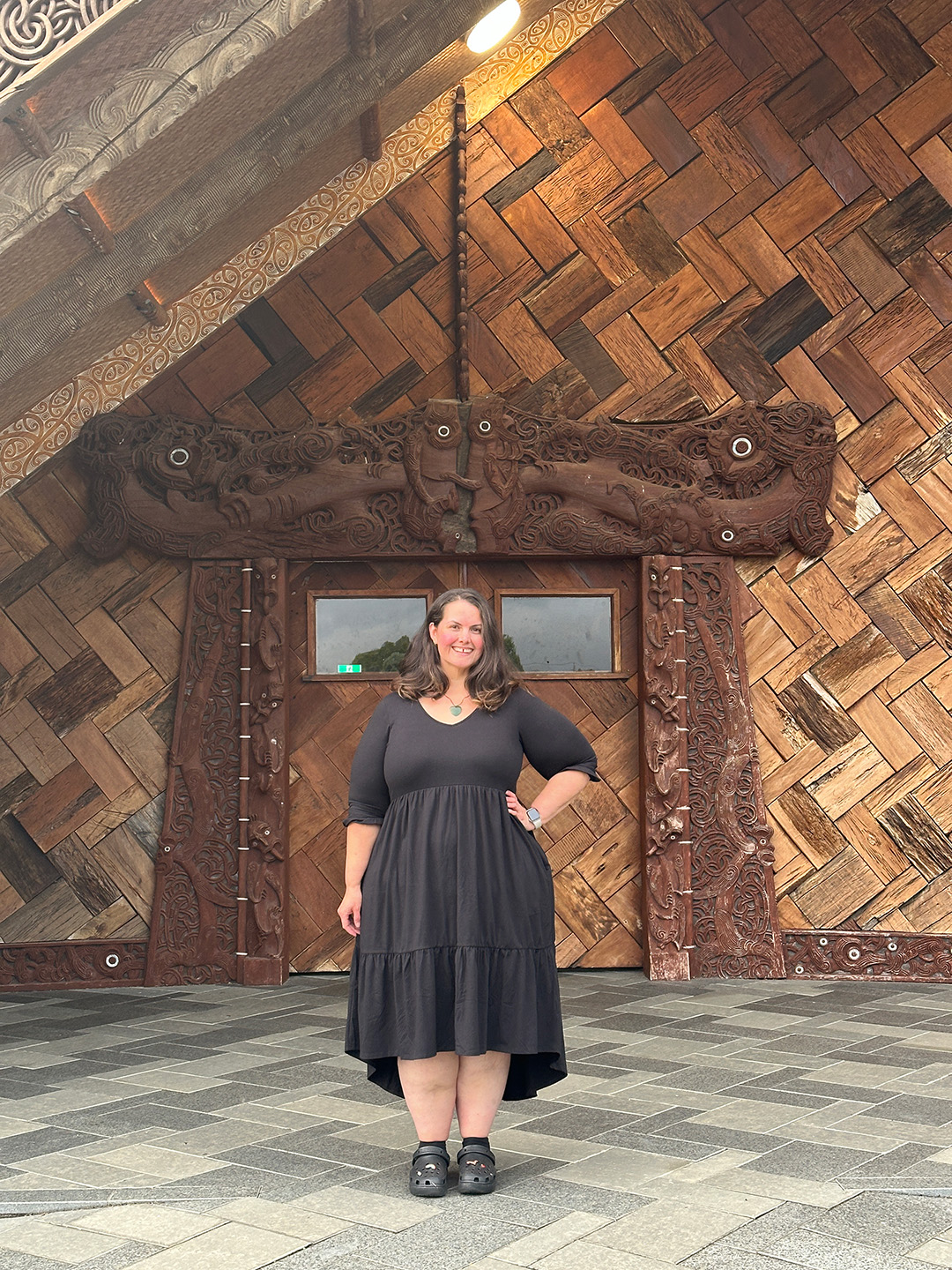
Standing outside Ngākau Māhaki at Te Noho Kotahitanga Marae in 2023.
A couple of years ago, my friend Hana enrolled in Kura Pō, te reo Māori night classes, at Unitec. I knew that this was my chance – to join classes with a friend so we could encourage each other along and hold each other accountable for turning up and practicing. My resolution that Matariki was to throw myself into it with enthusiasm, and I did. As soon as I stepped into Ngākau Māhaki, the whare whakairo (carved meeting house) at Te Noho Kotahitanga Marae, I knew I’d made the right choice. For a year and a half, I attended one night class every week, working my way through levels tahi, rua and toru. I learned pronunciation and waiata, tense markers and tikanga, basic sentence structure and became comfortable speaking my reo out loud. It was the brightest spark in my week, especially when I was made redundant from my job of almost ten years – again I was feeling lost, but holding on to that connection with my language reminded me that I wasn’t alone.
When I started a new job, I decided I wanted to take my studies a bit further. In some kind of ADHD delusion, I thought “sure, I can do all of the things”, and so I went from attending a night class once a week, to enrolling in full time study with Te Wānanga o Aotearoa while also working full time. I really did throw myself in the deep end, and don’t recommend that everyone take on this much all at once, but now that I’m halfway through my first year I can confirm that it’s absolutely been the right choice for me. Not only do I get to attend classes and kōrero Māori, there’s also lots of online learning and resources so I can be constantly learning and practicing; we have weekend wānanga where we get together with other students who are at the same level; and noho marae. Information is taught in a variety of ways that means people with different learning styles are catered for, and I finally feel like I’m in the right place and learning in the way that works best for me.
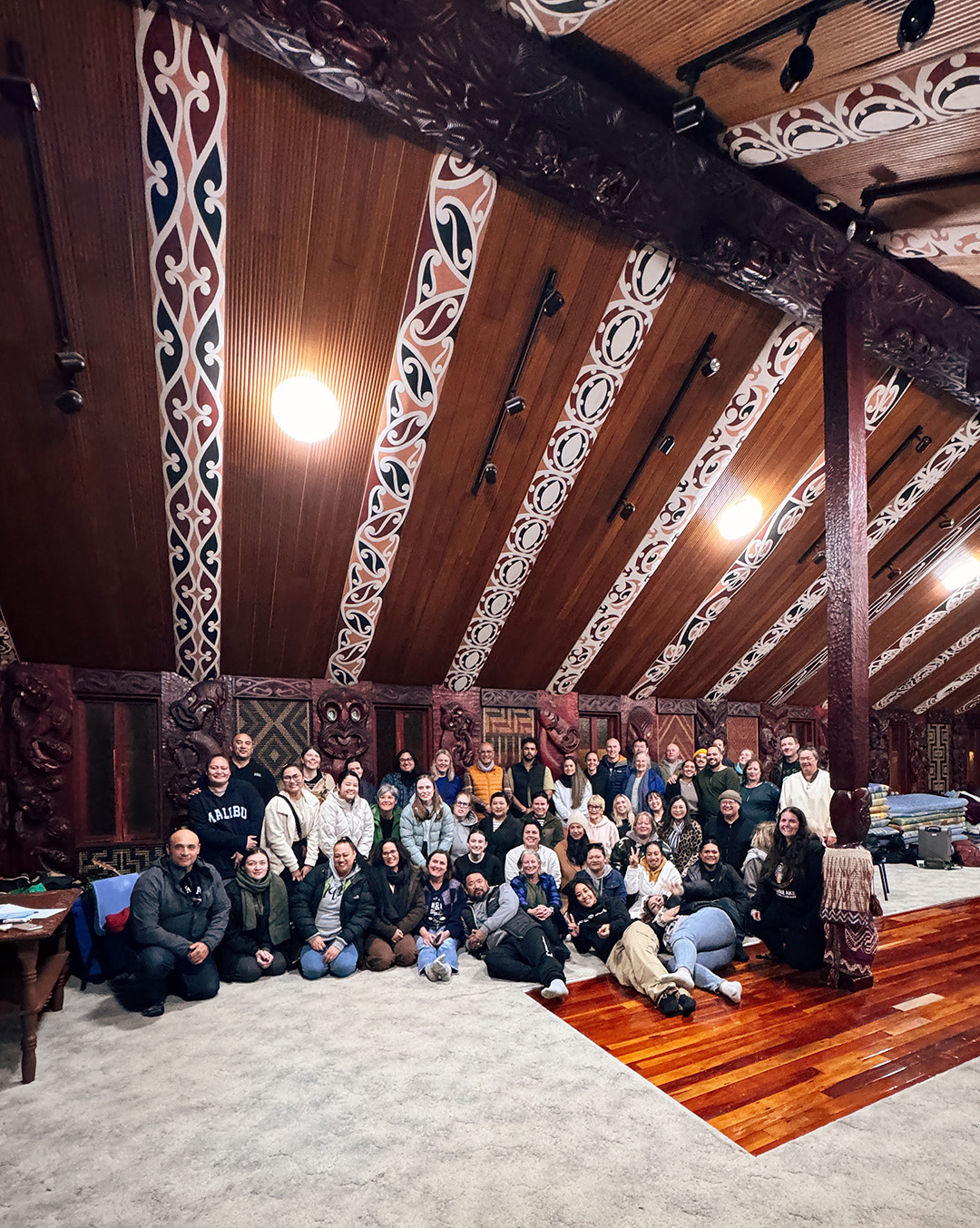
On a noho marae at Whaiora Marae with members of my He Pī ka Pao class in 2025.
Learning te reo Māori helps me to feel more connected – to my tīpuna (ancestors), to the whenua (land) and to myself. It feels like a cloak wrapping around me, like coming home, like finding a piece of me that’s been missing for a long, long time. Learning te reo Māori has had a really positive impact on my life. I feel more confident speaking te reo Māori, more comfortable knowing that I’m using the correct terms both in my mahi and my personal life, and it’s made me feel more connected to te ao Māori too. I have a better understanding of how things are done and why, and I’m starting to explore my whakapapa and make those connections with my whānau and iwi.
I think it’s important to keep te reo Māori alive because it’s a taonga (treasure). It’s not just one of our official languages, it’s our indigenous language and should be one we uplift and speak with pride. There has been a really yuck anti-Māori sentiment building in Aotearoa that has really thrived over the last few years, encouraged by the Government who continue to enact harm to our people and our whenua (land) through law and policy changes, fast tracking of bills and even removing Māori names from government departments.
One thing I do to try and uplift te reo Māori, is using it as much as I can – at work, at home, and online – especially if it’s something new that I’ve learned, because that practice helps to cement it in my mind. I use it in greetings and farewells, when talking about my day or what I’m doing, and I’ll try to use more commonly known words as part of my everyday language. I’m also part of the waiata rōpū (singing group) – I’m not the greatest singer but it brings me so much joy to get together and sing waiata Māori with my colleagues.
Kāhore taku toa i te toa takitahi, he toa takitini.
We cannot succeed without the support of those around us.
If you’re just beginning your te reo Māori journey, kaua e whakamā, don’t be shy! Speak Māori as much as you can, out loud. If you’re not sure how to pronounce a word, it’s okay to ask! I also recommend Te Aka, which is a Māori Dictionary that includes audio pronunciations of words. I know it can feel intimidating when you’re in the learning stages, when you lack confidence and worry about making a mistake so much that you overthink things (I feel like I’m the Queen of Overthinking sometimes!), but I’ve come to realise that mistakes are part of learning. When you’re actively practicing the things that you’re learning, it makes it much easier.
One other tip is to start consuming Māori media as much as you can – I read children’s picture books and watch kid’s tv shows on Whakaata Māori, and it’s really encouraging that the more I’m learning the more I understand (and the less I rely on subtitles). To my delight, I’ve discovered that when I watch a show, I’m starting to really grasp what’s being said!
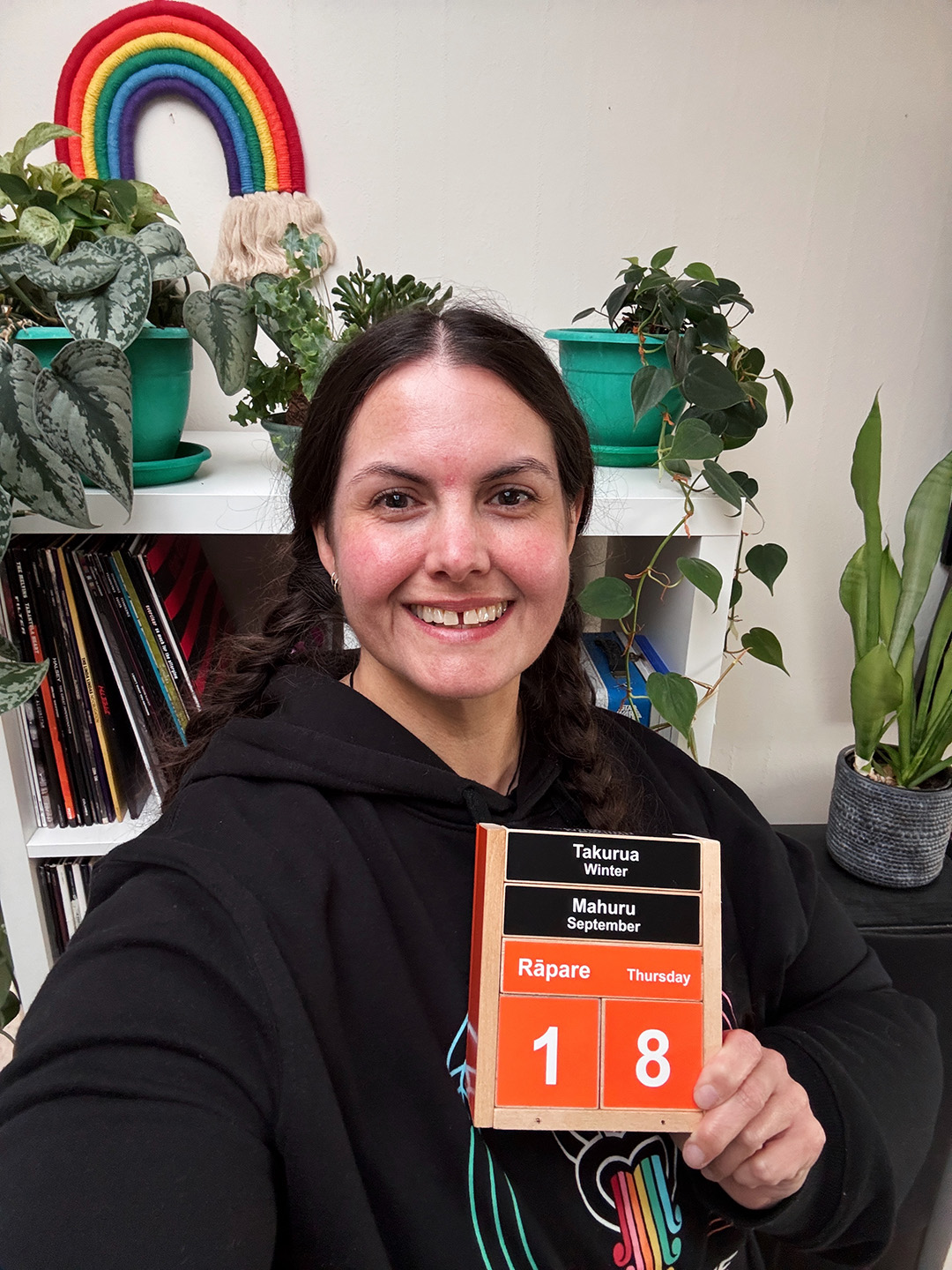
I made a Te Reo Māori Block Calendar to help me learn the kupu Māori for the days of the week, seasons and months of the year.
If anyone else is learning te reo Māori at the moment (whether it’s a course, night classes, online, working your way through the Māori Made Easy books or some other form of learning), let me know! I’d love to hear how you’re getting on and what you’re enjoying most.
